Top Web Design Trends That Emerged in 2025
In 2025, web design evolved beyond aesthetic trends, shifting towards a deeper focus on user experience, sustainability, and adaptable interfaces, offering visitors more intuitive, engaging, and responsible digital experiences. From adaptive colour systems that respond to lighting conditions to motion-driven interfaces that guide user interaction. In this post, we’ll explore the top web design trends of last year, highlighting how their impact on digital experiences, where every design decision impacts guest satisfaction and business performance.
Beyond Dark Mode: Adaptive Colour Systems
Dark mode is no longer a feature; it is expected. What changed in 2025 was how dynamic colour systems became. Instead of selecting a fixed palette and finalising it, designers began creating systems that adapt. Contrast shifted subtly based on lighting conditions. Accent colours adjusted for accessibility without compromising brand identity. This approach encouraged thinking beyond individual screens and toward flexible systems. Colour became responsive rather than static.
Motion Driven Interfaces: More Than Just Eye Candy
This was the year motion stopped being decorative and started becoming structural. Animation began to be treated the same way as typography, as a communication tool rather than a visual extra. A subtle fade in signals that something has changed. A smooth transition reassures users they are still in the same place. When motion is executed well, users barely notice it, but they feel the difference. When overdone, it becomes distracting and tiring. In 2025, the strongest websites used movement with restraint. Nothing flashy for the sake of it, just thoughtful transitions that guide the eye and create a cohesive experience.
AI Assisted Design, But With Human Craftsmanship
AI tools became a standard part of many design workflows this year, though not in the way many predicted. They did not replace creativity; they accelerated repetitive tasks. AI helped generate layout variations, explore type pairings, and test user flows more efficiently. The real work still came down to judgment. Understanding what feels right. Understanding what serves the brand. AI can generate options, but it cannot fully grasp nuance, culture, or emotion. In 2025, the strongest results came from designers who treated AI as support, helpful but not in control.
Asymmetry With Purpose: Breaking the Grid With Intention
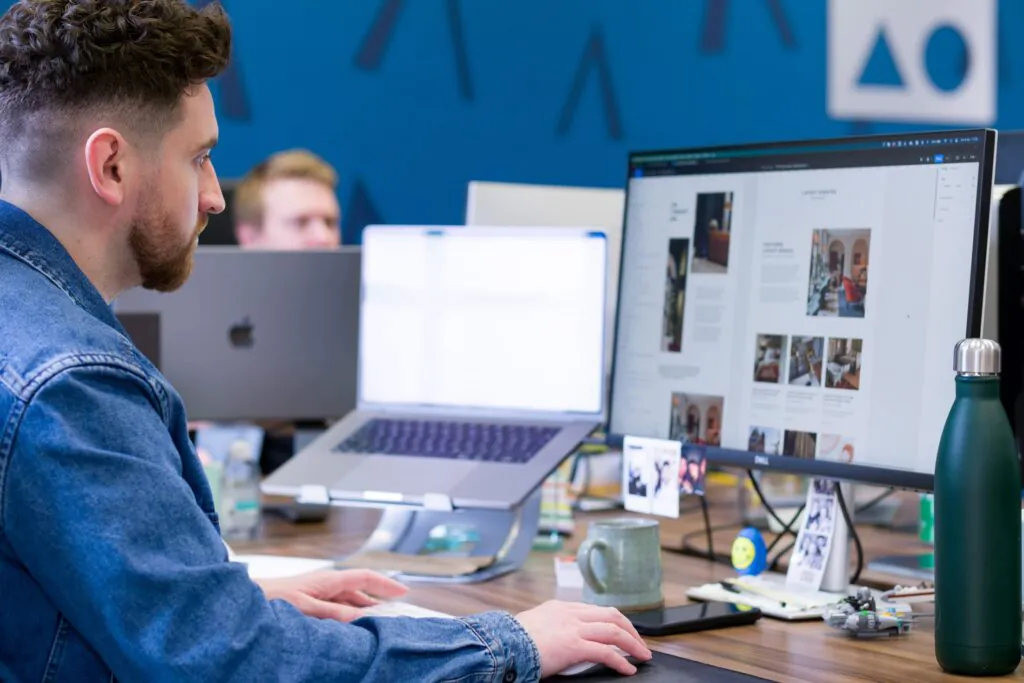
For years, safe, centred, perfectly balanced layouts dominated the web. In 2025, things loosened up. Designs became more editorial and expressive. Elements overlapped. Headlines interrupted images. White space was distributed less evenly. The key difference was intention. Random chaos does not work. The layouts that stood out maintained a strong hierarchy and clarity. They were simply not afraid to feel slightly imperfect. That unpredictability made websites feel more crafted and less templated.
Ultra Minimalism Meets Hyper Function
Minimalism matured in 2025. Instead of sparse landing pages with oversized typography and vague messaging, the focus shifted to purposeful simplicity. Every button needed a reason to exist. Every section had to earn its place. White space supported focus and comprehension rather than serving as a trend-driven aesthetic choice. Stripping a page down to its essentials often improved performance. Cleaner does not mean something is blank; it means clearer in focus..
Organic Shapes and Natural Textures
After years dominated by sharp grids and rigid layouts, softer elements returned. Subtle grain overlays, gentle curves, and layered shapes introduced a more human feel. This shift reflects a broader desire for warmth in digital spaces. Perfect symmetry can feel cold and mechanical. Organic details, even small ones, add personality. They make a website feel crafted rather than purely engineered.
Sustainability Focused UX
This trend carries particular weight. Performance optimisation was once primarily about speed and search visibility. In 2025, it became about responsibility. Heavy animations, oversized videos, and bloated frameworks carry environmental costs. Conversations around lightweight builds, efficient code, and reducing unnecessary assets became more common. It changed how impressive features were evaluated. If a feature does not meaningfully improve the experience, it likely does not belong. Thoughtful design is not only good user experience, but it is also responsible design.
Summary
At Up Hotel Agency, we do more than design beautiful websites; we create digital experiences that work as hard as you do. We understand that in hospitality, your website is not just a brochure; it is your most important sales tool. Every decision we make is rooted in strategy, performance, and guest experience. From thoughtful design and seamless booking journeys to fast load times and mobile optimisation, we build sites that convert visitors into direct bookings. When you work with us, you gain a partner who understands hotels and branding and knows how to turn creativity into measurable results.

![Up Webaward 2025 Winners Cover [Blog Hero]](https://uphotel.agency/wp-content/uploads/2026/03/Up-Webaward-2025-Winners-Cover-Blog-Hero-800x450.webp)